What does a Next.js developer actually build?
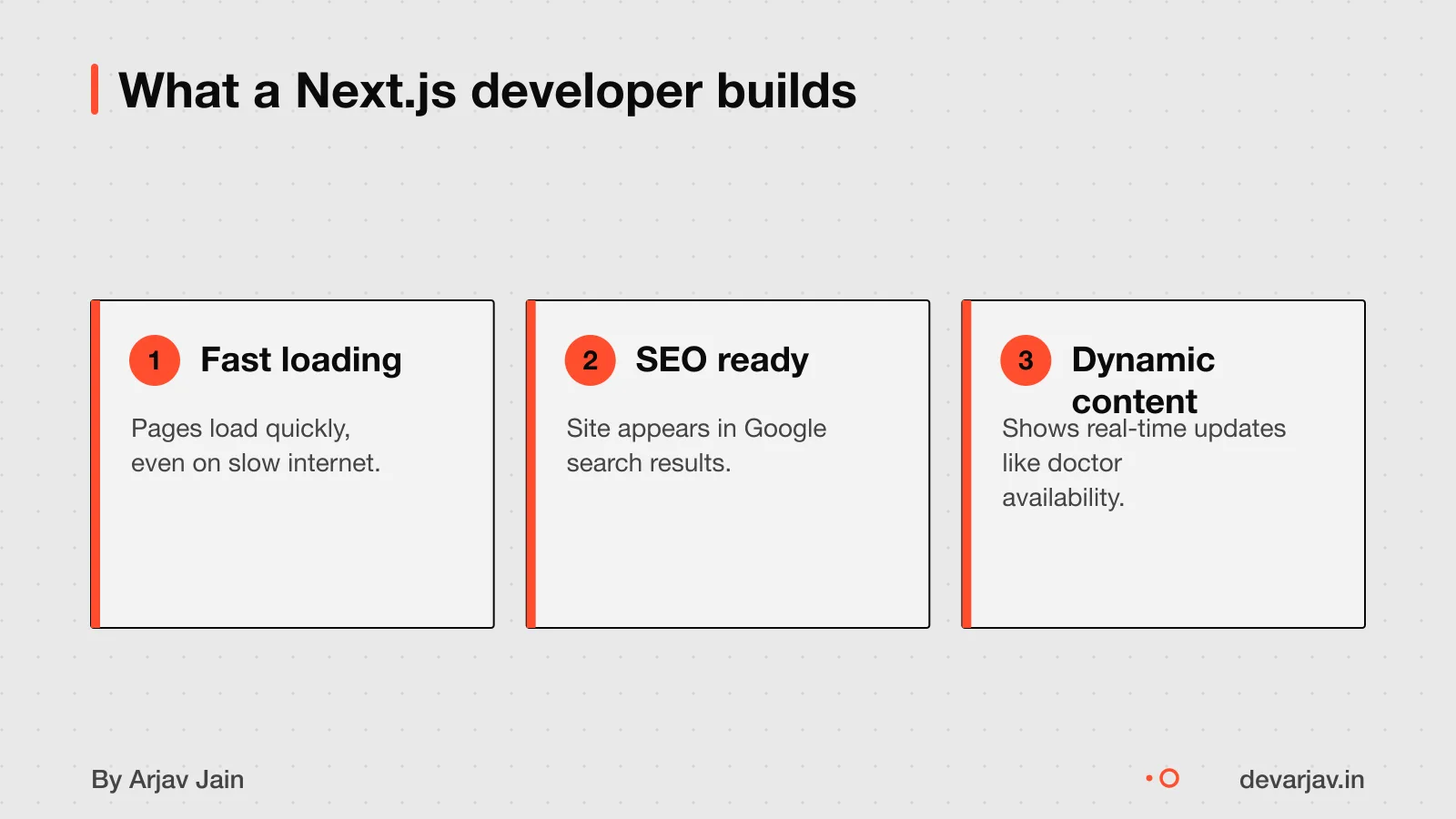
A Next.js developer builds fast, search-friendly websites and web apps using a modern tool that works for both the front and back end. They can make apps like a clinic website that shows real-time doctor availability and ranks well on Google. A Next.js developer is a React developer who also handles server tasks like fetching data or processing forms.
Next.js is different from plain React because it adds server-side features by default. While React runs only in the browser, Next.js can render pages on the server (SSR). Generate them at build time (SSG), or update them in the background (ISR). This helps your site load faster and appear in search results.
They can build marketing sites, dashboards, or tools that need both a user interface and a data connection. For example, a local shop’s website with live inventory or a school portal that updates attendance can be made with Next.js. These apps use server components to fetch data directly, reducing the need for extra backend code. You may not know what an API is yet, but the developer will use one to connect your site to data.
Do you really need a Next.js developer?
Next.js is best when your site needs strong SEO and fast loading, like a content site or online store. It works well for apps that show dynamic data, such as bookings or user dashboards. If your site is mostly static, like a brochure or portfolio, simpler tools may be enough.
For basic websites, consider WordPress or static site generators like Jekyll or Hugo. These are cheaper and easier to manage. They suit small clinics, local shops, or schools that only need pages with text, images and contact forms.
Next.js is overkill if you only need a simple site with no user logins, forms or real-time updates. It also adds cost and complexity, so it is not ideal if you have a tight budget or want to launch fast.
If you plan to scale later, say, add a member area or blog with hundreds of posts, starting with Next.js may save time. But if not, go simple first. You can always rebuild later.
When a mobile app is better, a Flutter developer might be the right choice instead.
How much does a Next.js developer cost in India?
A full-time Next.js developer in India costs between ₹7 lakh and ₹16 lakh per year. This breaks down to ₹58,333 to ₹1,33,333 per month. Freelancers may charge less or more, often earning ₹50,000 to ₹3,00,000 per month depending on their clients and workload.
Hourly rates for freelancers on platforms like Upwork or Fiverr range from $15 to $50. These rates depend on experience, location, and whether the developer works with Indian or international clients.
Your cost changes based on three things: the developer’s skill level, whether they are local or global-facing, and how you hire them. A senior developer with AI or backend API experience will cost more. Someone serving US clients may charge in dollars, even if based in India. And if you hire through an agency, you pay a markup over the developer’s actual rate.
Keep in mind that these are market rates. Your actual cost depends on your project’s scope, clarity, and how well you communicate. A clear brief and active feedback can reduce rework and lower costs.
Next.js developer rates in India
Want a number for your idea? Send one line on WhatsApp. I reply with what drives the cost and what to cut.
Message me on WhatsApp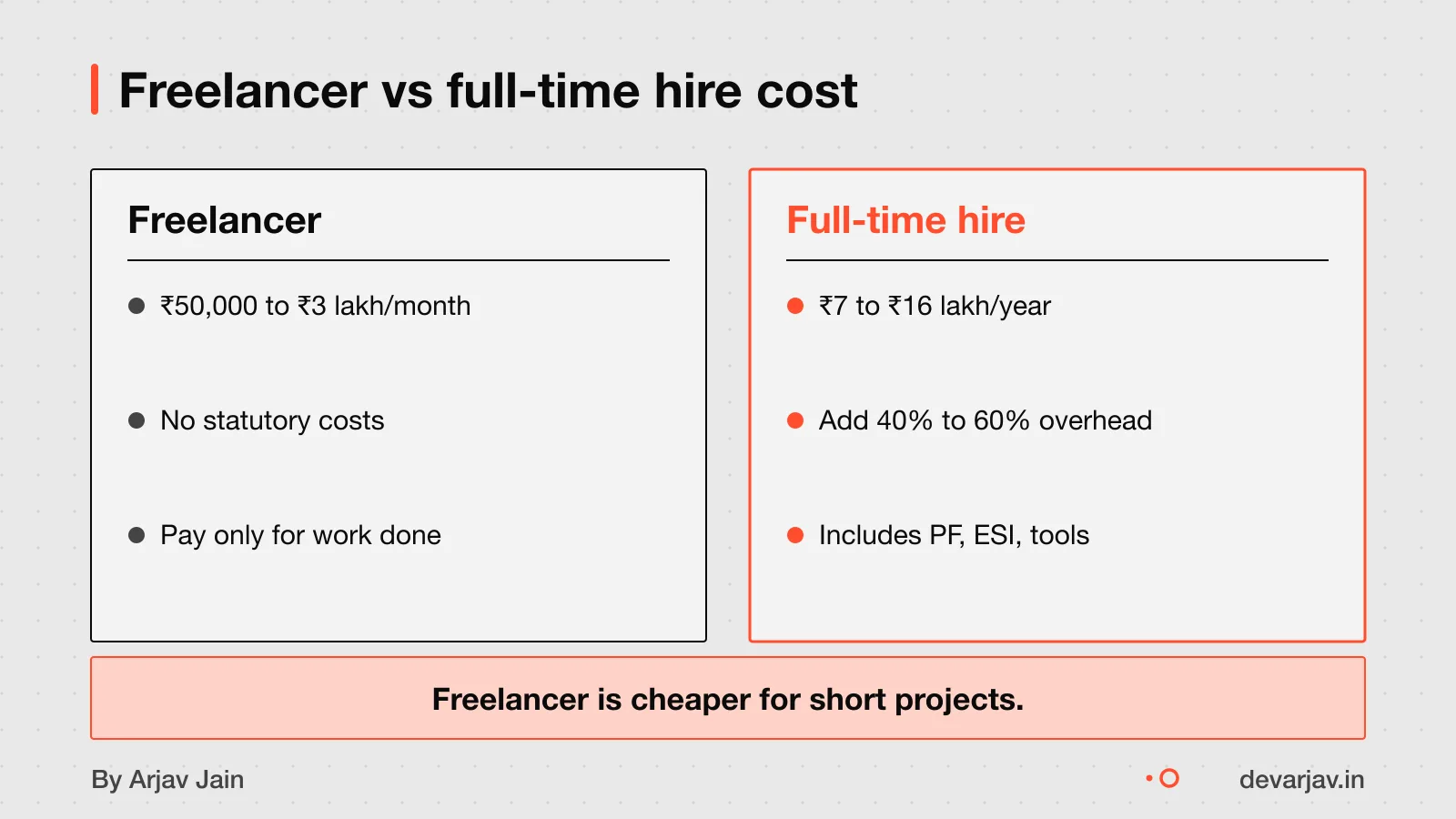
Freelancer, agency, or full-time: which is best?
A freelancer is often the most cost-effective, an agency offers backup if someone leaves. A full-time hire gives you daily focus but comes with high overhead. Each has trade-offs in speed, control, and long-term commitment.
Freelancers typically charge project or hourly rates and can earn ₹50,000 to ₹3,00,000+ per month depending on their clients and skill. You pay only for work done and can stop anytime. But if they quit, you must find a replacement yourself.
Agencies assign a dedicated Next.js developer to your project, and they stay until it meets your expectations. If one developer leaves, the agency replaces them. This reduces risk but costs more than a freelancer.
A full-time hire works only on your product. You get full control and faster daily progress. When you include benefits, equipment, and management, total costs can be up to 60 percent more than their base pay.
For most small businesses, starting with a freelancer or agency developer is safer. You test the idea without high costs. If the product grows, you can consider a full-time role later.
How to check a developer's skill without being technical
Ask about how they handle search engine visibility and page speed, since these are key for any business site. A developer familiar with web development should be able to explain SSR and SSG in simple terms, and say when each is used.
Review their portfolio for live, working websites, not just videos or designs. Open the sites yourself and check if they load quickly and work on your phone. Look for real projects like a clinic booking dashboard or an online store with live inventory, not just placeholder pages.
To test business understanding, ask them to describe how they would build your product in one minute. A good developer will ask about your users and goals before talking tech. For instance, if you run a local diagnostics centre. They should suggest features like report tracking or home sample booking, not just say they know React.
Avoid the cheapest option. Freelancers offering very low rates may deliver unusable work. Instead, look for clear communication, real demos, and evidence of finishing projects.
Have a quote in hand? Send it to me and I will mark what is missing.
Message me on WhatsAppWhat if the developer quits halfway?
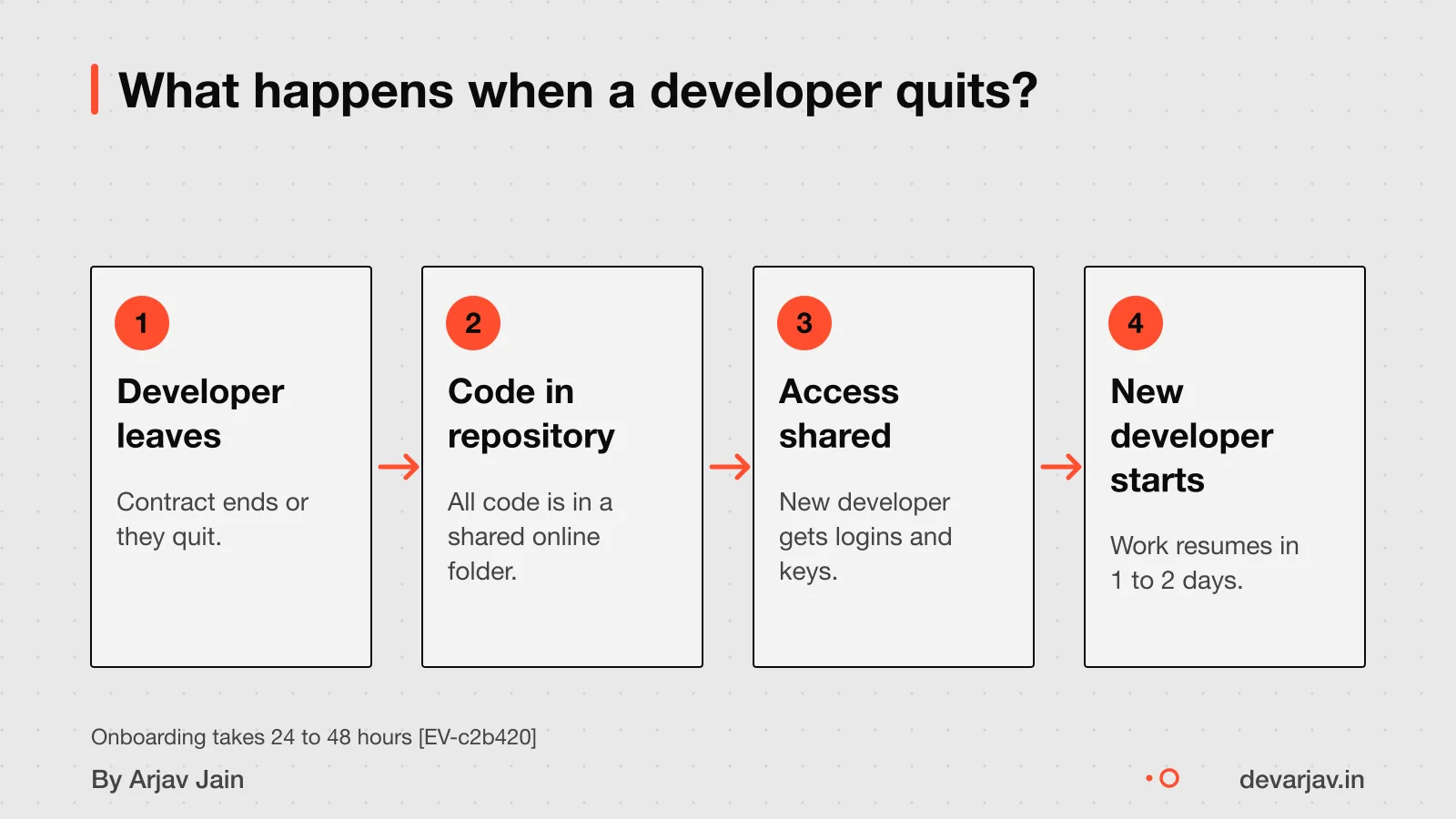
If your developer quits, you can protect your work by ensuring you own the code and have access from day one. Use contracts that assign full rights to you and store code in a repository you control. This way, you can hand it to a new developer without delays.
Onboarding a new developer takes 24 to 48 hours, not months, as long as the code is well-documented and you have full access. As an estimate, assuming full code access and documentation, onboarding may take 1 to 2 days.
From day one, make sure the developer pushes all code to a shared, secure repository like GitHub or GitLab that you can access. Ask for simple documentation of the main parts of the app. This reduces risk and keeps your project moving, even if the developer leaves.
When this advice is wrong for you
When this advice is wrong for you
You do not need a Next.js developer if your site only shows fixed content like a business address, menu, or portfolio. In such cases, simpler tools like WordPress or static site builders work faster and cost less.
If you are still testing your idea and do not have clear user needs, hiring any developer too early can waste money. Wait until you have spoken to real customers and know what problem you are solving.
Small clinics, local shops, or service providers who only need a contact page or booking form may be better off with a lightweight tool. Or they may use a pre-built template. For example, you can hire a developer for a clinic booking app who uses simpler, proven tools.
Next.js is powerful but not always the right fit for basic needs.
Related reading: when a mobile app is better, hire a Next.js developer in Raipur.
Next step: message me on WhatsApp with what you want to build. No forms, no sales team.
Message me on WhatsAppAssumptions behind the numbers
- Developer works full-time on your project
- Market-rate pricing applies as per Indian freelance norms
- Project needs SEO or fast loading, hence Next.js is suitable
Your checklist
Before you hire, here are 12 things to check in the order they matter. Tick what you've verified.
Tech
Scope
Money
Ownership
Walk away if
- Quotes only a total with no breakdown
- Won’t show past client work
- Asks for full payment upfront
- Keeps code or hosting access
- Promises a launch date before seeing scope
Questions people ask
How do I pay a Next.js developer safely?
Use milestone payments and release funds only when you are fully satisfied with each stage of work. Freelancer platforms offer this system to protect you. Keep proof of every payment and agreement.
Who owns the code after the project is done?
You own the code only if your contract says so. Freelancers do not automatically assign intellectual property. Sign a written agreement that clearly transfers ownership to you.
What legal rules apply when hiring a freelancer in India?
You may need to deduct TDS and check if the freelancer charges GST. A contract should cover payment, timeline, and IP rights. Check this for your case with a chartered accountant or lawyer.
How do I know if my Next.js site is secure?
Check that your site runs Next.js version 15.5.18 or 16.2.6, which fix 13 security advisories including denial of service. Middleware bypass, server-side request forgery, cache poisoning, and cross-site scripting. Update regularly and avoid outdated plugins.
What are the hidden costs of hiring a full-time Next.js developer?
Statutory costs like provident fund and gratuity add 12 to 15 percent to the salary. Total overhead, including benefits and management, can be 40 to 60 percent more than the base pay.
Can I switch to another developer later if needed?
Yes, you can switch if you have the source code and access to hosting and domain. Onboarding a new developer takes 24 to 48 hours if all assets are ready, according to some sources.
What should I look for in a Next.js developer's portfolio?
Look for live demos of real projects, not just code screenshots. Avoid developers who only show low-rate work, as the cheapest option rarely delivers usable results.