What is a milk and dairy delivery app?
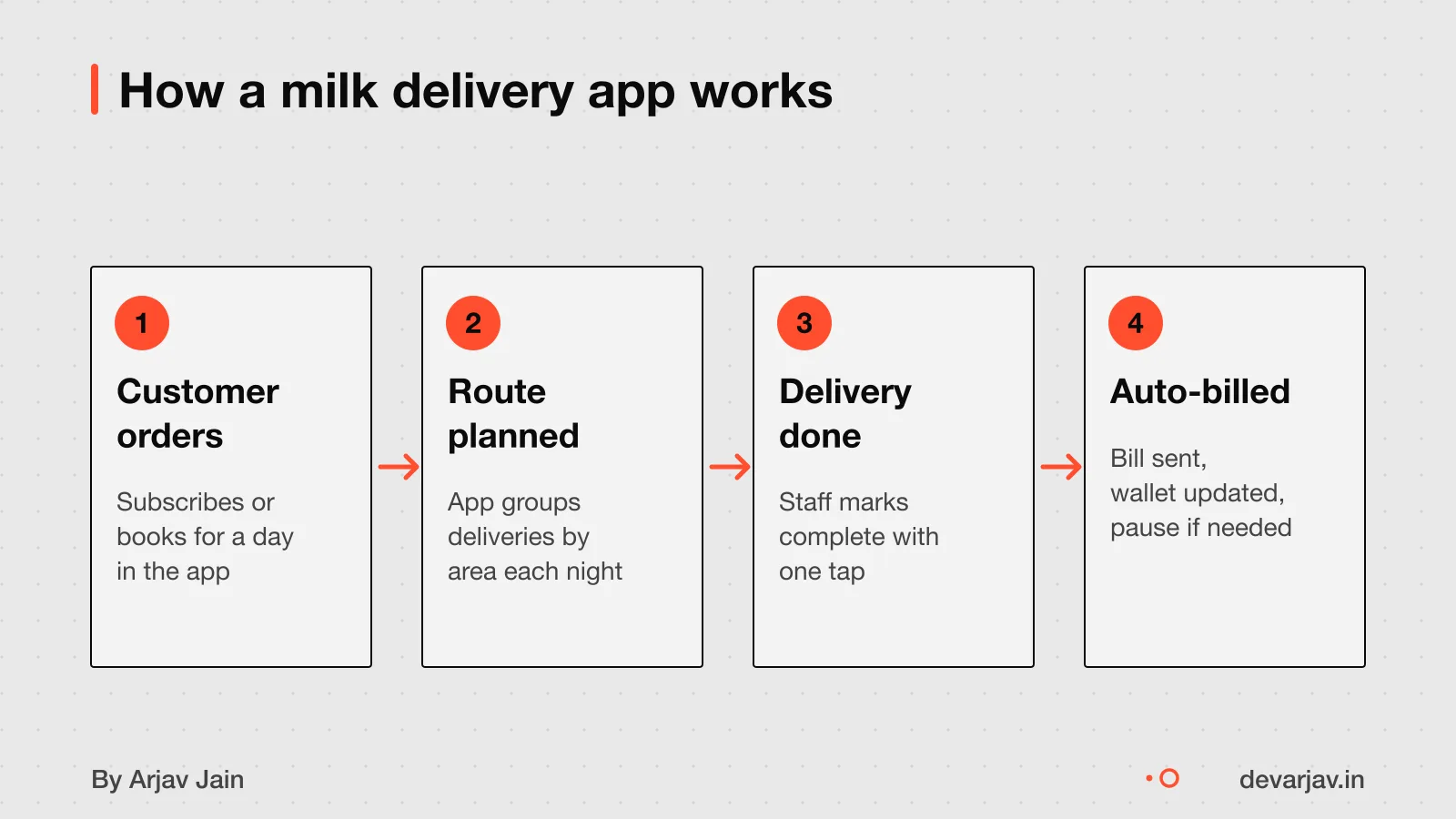
A milk and dairy delivery app lets customers order milk and dairy products for home delivery, usually through a subscription. It connects you with local suppliers and manages orders, payments, and delivery tracking. Unlike grocery apps, it focuses only on milk and dairy, with features like daily or weekly recurring deliveries.
Customers can pause or skip a delivery when they are away or do not need it. This is a key part of the subscription model, giving them control without cancelling. The app simplify the whole process from order to doorstep, with real-time updates.
You can include features like easy payment options, feedback forms, and delivery reminders. For a full list of what to include, see Must-have features in a milk delivery app.
Is a milk delivery app worth it for a small dairy?
Yes, a small dairy with 200 customers can benefit from an app, especially if you use digital payments. Digital payments set the presumptive tax under Section 44AD at 6% of turnover.
The app pays for itself faster when you have more customers. As an estimate based on a $50,000 investment and 500 customers, the investment recovers in 6 to 8 months. With 1,000 customers, it can recover in 3 to 4 months.
UPI Autopay works for any customer with a bank account and UPI app, no credit card needed. You can collect payment mandates using just a printed QR code, cutting errors and effort.
Still, the GST treatment of the app development cost itself is not known. Talk to your CA before claiming any input credit. See how much a milk app costs to plan your budget.
What features add the most cost?
Features like subscriptions, delivery tracking, and digital wallets add the most cost because they need secure logic, user dashboards, and third-party links. These features increase development time and must work without errors. For example, a subscription system must auto-renew, send reminders, and handle pauses.
Back-end development costs 30 to 40% of the total app budget. This part runs the app behind the scenes: storing customer data, managing orders, and syncing with delivery staff. Without a strong back-end, the app slows down or fails during peak hours.
Building for both iOS and Android raises the cost by 40 to 60%. Each platform needs separate testing, design tweaks, and app store rules. Even with cross-platform tools, some code must be written twice. For a small dairy, starting with Android alone can cut costs.
Complex design, extra integrations, and team location also affect price. But the biggest jumps come from features that touch money, routes, or real-time updates.
Want a number for your idea? Send one line on WhatsApp. I reply with what drives the cost and what to cut.
Message me on WhatsAppHow much does route planning add to the cost?
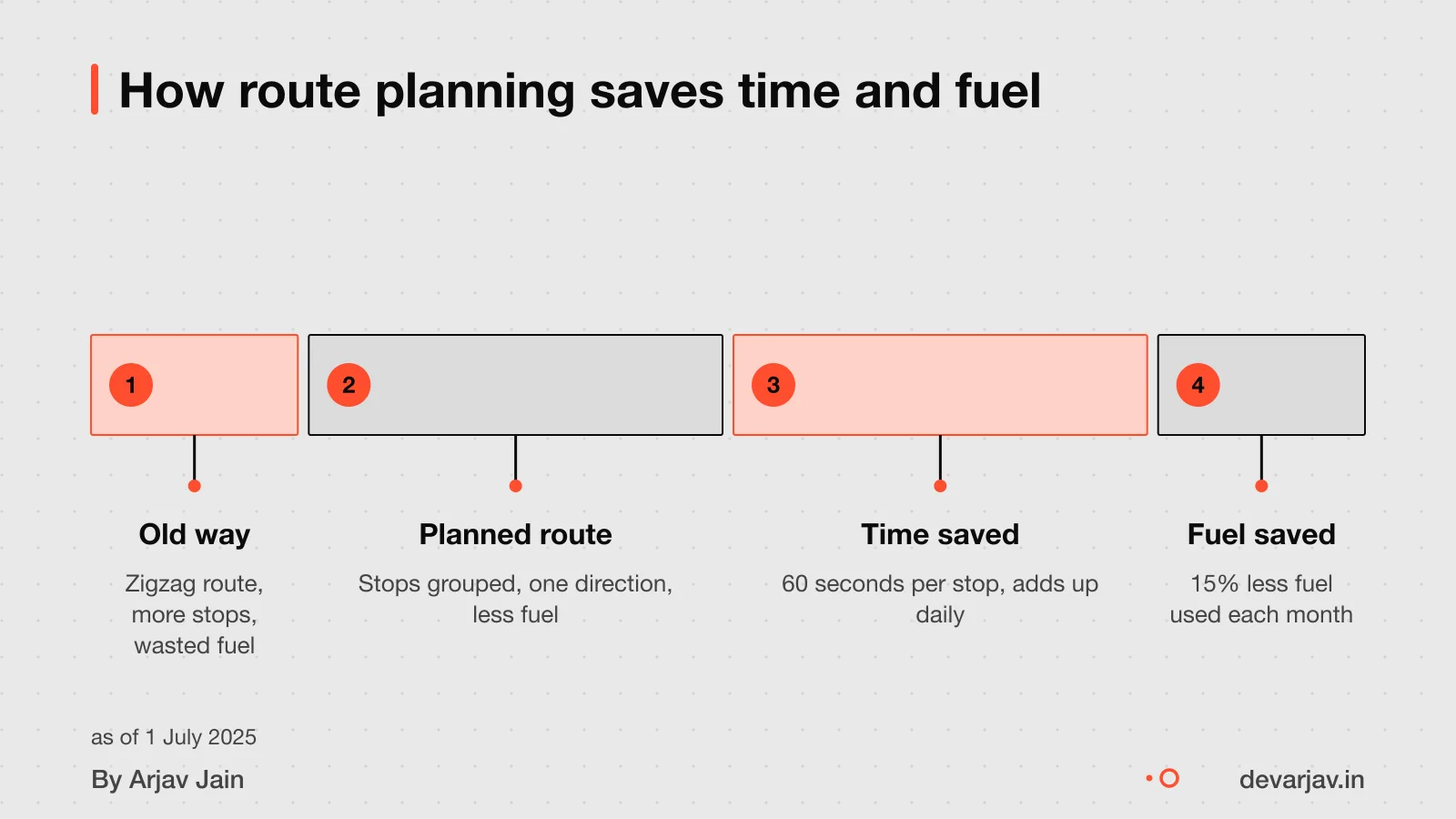
Route planning software maps the best delivery order for your staff, cutting daily planning time to under 60 seconds. It helps avoid backtracking and missed deliveries. This saves time and fuel, and can boost delivery productivity by 15%. For a small dairy with 10 to 15 stops daily, this means more deliveries with the same staff. The software can optimise multi-stop routes to ensure timely drops.
It may use your existing delivery staff data, but that depends on how the app is built. Since whether delivery staff data is needed is not known, check with your developer how they plan to set up routes. Some systems let you input addresses manually at first and add driver data later.
How to build a milk delivery app
Does a digital wallet increase the cost?
Yes, adding a digital wallet increases the cost of your milk delivery app. A digital wallet lets customers store money in the app and pay with one tap. This means you must add UPI integration, KYC checks, and audit logs for every transaction. These features make the backend more complex and take more time to build.
As an estimate, adding a digital wallet increases the cost by ₹75,000. This assumes your developer must build UPI integration, collect and verify customer KYC details, and keep full logs for audits. You may also face transaction fees when customers use the wallet. Payment gateways charge processing fees for each withdrawal or transfer. These fees vary by provider and volume.
Since state-level digital payment rules for milk delivery are not known, talk to a local tax or compliance expert before launching the wallet feature. They can help you follow any local rules and avoid penalties.
How long does it take to build the app?
An MVP version of your milk delivery app takes 2 to 3 months to build. This basic version includes customer sign-up, order placement, and delivery tracking. A full app with all features may take 3 to 4 months. Building for both Android and iOS at the same time does not add much time, as most code can be shared using tools like Flutter. However, testing on both platforms adds some extra days. If you start with one platform, you can launch faster and add the second later. For most small dairies, starting with Android makes sense since it covers over 95% of local customers. A detailed timeline helps you plan each step without delays Detailed timeline for building a milk app.
What does app maintenance cost?
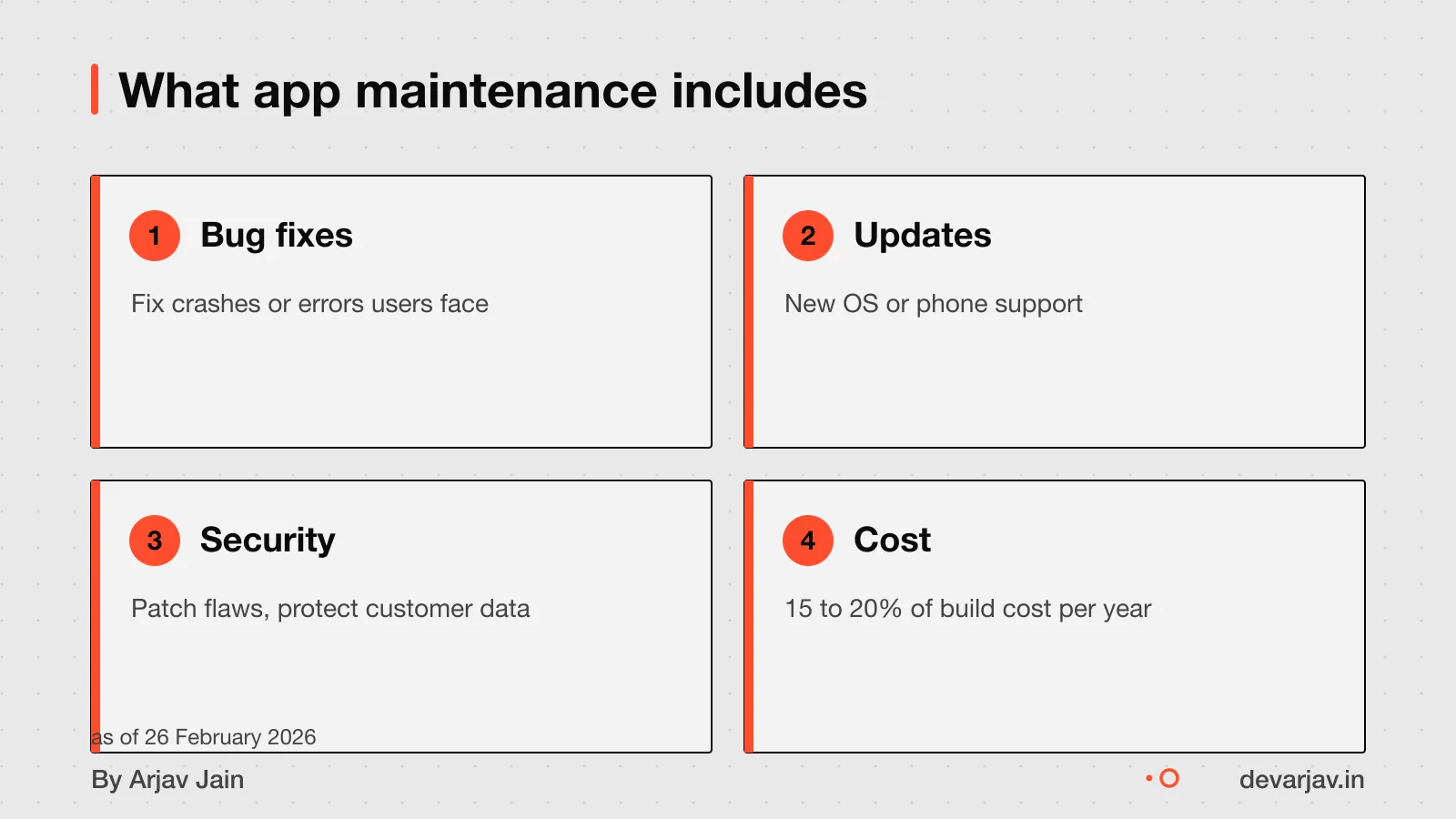
App maintenance costs 15 to 20% of the development cost per year. For a ₹5 lakh app, that is ₹75,000 to ₹1 lakh each year. This cost covers updates for new Android and iOS versions, bug fixes, and security patches. It also includes minor improvements to keep the app running smoothly. Some developers offer maintenance packages that bundle these services. These packages help you budget for ongoing support. Without maintenance, your app may stop working when phones get updated.
What are the risks of building the app?
You could face delays, failed app approval, or billing errors. Poor communication with your developer can stall progress and leave you unsure of the timeline. If the app does not work as promised or copies another app’s design, Apple may reject it. A billing error, like wrong subscription charges, can upset customers and harm trust. For example, charging a customer twice for a weekly milk order leads to complaints and refund requests.
To reduce billing mistakes, include clear subscription rules and test them before launch.
How do I check if a developer is good?
Look for a portfolio with real apps, not just screenshots. Download their past apps from the app store and use them for a few minutes. Check if buttons work, screens load smoothly, and the app feels reliable. A developer who only shows mockups may not have built working apps.
A good developer shows a range of projects in their portfolio. For example, a delivery app, a billing tool, and a customer portal show range. They should explain app architecture, database design, or security considerations. Ask them: "How would you design the database for 500 daily orders?" or "How do you protect customer phone numbers?"
If they give clear, simple answers, they understand the work. If they use jargon or avoid the question, that is a warning sign. Always test the apps they claim to have built. A working app tells you more than ten screenshots.
Not sure if your project has this risk? Tell me the plan in two lines and I will say yes or no.
Message me on WhatsAppWhen this advice is wrong for you
When this advice is wrong for you
You do not need an app if your customer base is under 50 and all orders are fixed. A simple WhatsApp group with daily reminders works better and costs nothing. If most of your customers use feature phones or do not check messages often, an app will not increase sales.
There are cheaper alternatives. You can use a shared Google Sheet or a basic billing app like KhataBook to track deliveries and payments. These tools cost little and are easy to learn. For recurring orders, a printed calendar with delivery marks still works well in many towns.
If your current paper system is accurate and your staff are not on smartphones, switching to an app may slow you down. Training takes time and mistakes can lead to missed deliveries. Digital tools help only when your team is ready and your customers expect online service.
Next step: message me on WhatsApp with what you want to build. No forms, no sales team.
Message me on WhatsAppAssumptions behind the numbers
- Assuming route optimisation logic, driver data reuse, and real-time tracking
- UPI integration, KYC, audit logs
- 40 screens, 500 customers
Build your own estimate
A milk delivery app is not one app. It is a customer app, a rider app, a store tool and an admin panel. Switch features on and see how cost and time change.
Your working total
₹1,83,75010.5 developer-weeks × 5 days × ₹3,500 a dayCustomer app
Rider app
Dark store tool
Admin and backend
Where this goes wrong
- 01Inventory accuracy
The app is only as good as the shelf count. Plan for how stock reaches the system before you plan screens.
- 02Rider supply
Software does not create riders. Decide whether you build the rider app or use an existing fleet.
- 03Peak load
Evening rush is a different test from a demo. Ask how it is tested.
Ask for these before you sign
- Are the customer, rider and store apps all in this quote?
- Which area and how many stores does the first version serve?
- Who owns the inventory data feed?
- How is peak load tested?
Questions people ask
How much does a milk delivery app cost for 200 customers?
As an estimate, a milk delivery app for 200 customers costs ₹20 to 40 lakh. This range assumes a custom app with subscriptions, digital payments, and route planning. This estimate is based on $25,000 to $50,000 at ₹80/$. Costs can fall if you use a white-label solution or skip advanced features.
Can I start with a basic app and add features later?
Yes, you can start with a basic app and add features later. Most developers build in phases, starting with order and payment features. Plan your must-have features first and phase in route planning or digital wallets later to manage cost and risk.
Do I need GSTIN to accept digital payments in the app?
You do not need GSTIN just to accept digital payments, but you may need it for tax compliance and invoicing. Accepting digital payments may reduce your presumptive tax from 8% to 6% of turnover. Check this for your case with a chartered accountant.
How does auto-billing work in the app?
Auto-billing in the app uses UPI Autopay, which works for any customer with a bank account and UPI app. Before each debit, the app sends a 24-hour pre-debit notification as required by NPCI rules.
Can customers pause or skip delivery in the app?
Yes, customers can pause or skip delivery in the app. This is a standard feature in most milk delivery apps and helps retain subscribers during holidays or low-demand days.
What happens if the app shows wrong delivery routes?
Wrong delivery routes can waste fuel and delay deliveries. Good route planning software can boost driver productivity by 15%.
How do I verify a developer's route planning claim?
To verify a developer's route planning claim, test their past apps from the app store. Check if the app feels smooth and if buttons work. Avoid developers who only show screenshots without working apps.
Is a milk delivery app suitable for small towns?
A milk delivery app can work in small towns if your customers use smartphones and UPI. Assess your customers' tech use before investing. If most orders come via phone calls or WhatsApp, start there instead.
Can I move my app to another developer later?
Yes, you can move your app to another developer. The app keeps its reviews and updates during transfer. But if it uses Apple Pay, the merchant ID is not transferred and must be set up again.
What should I send to get a quote?
To get a quote, send a list of must-have features and your customer count. For example: 200 customers, daily subscriptions, UPI payments, and route planning. This helps developers give a realistic estimate.